
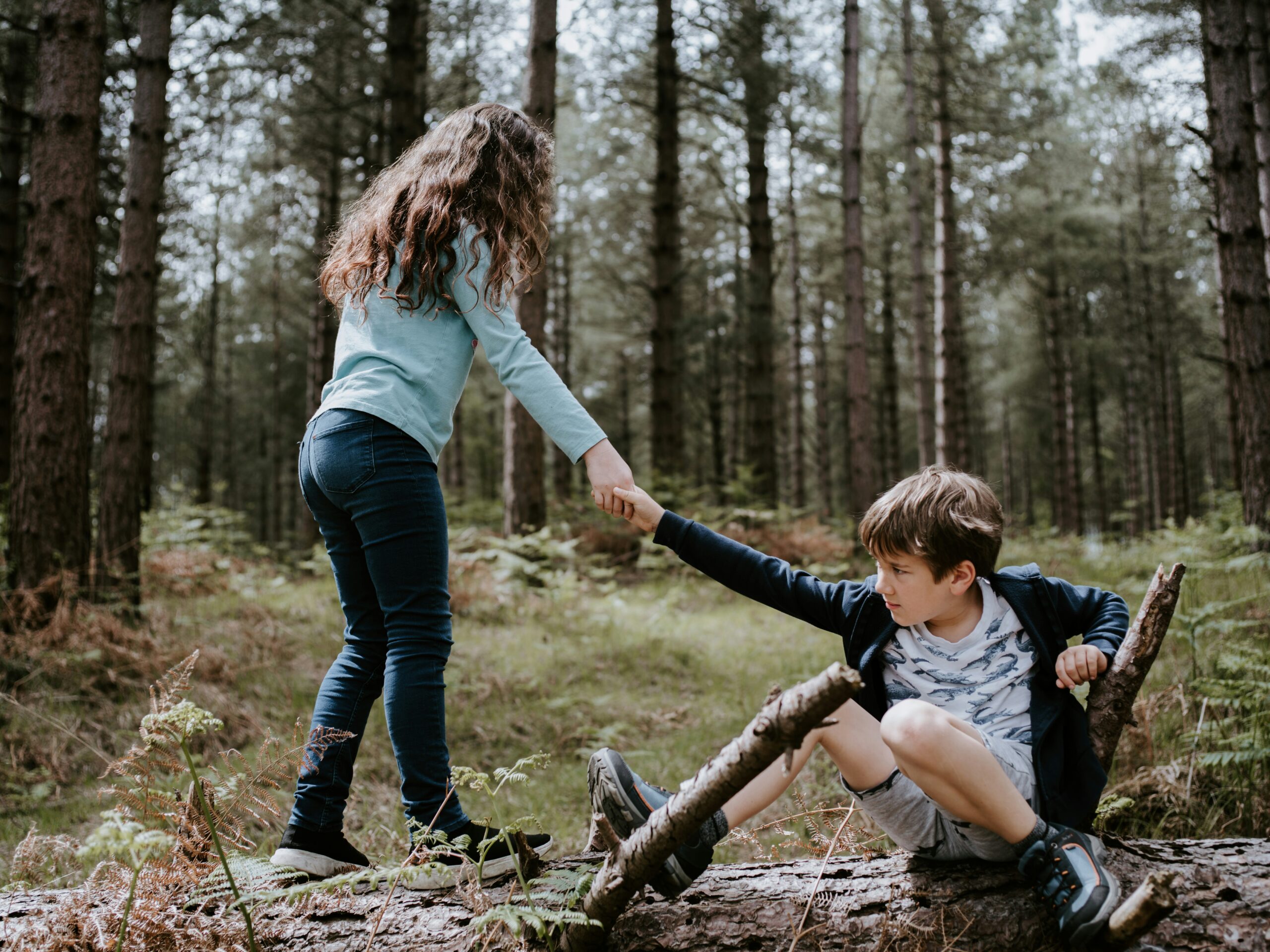
Sibling rivalry isn’t a new idea. It has existed for as long as families have existed. Brothers and sisters compete for attention, argue, compare themselves to one another, and sometimes carry those wounds far into adulthood. Most parents eventually come to accept that some level of rivalry between siblings is simply part of growing up.
But sibling rivalry can take on a deeper and more complicated shape in blended families, where not all children share the same biological parents and where family structures change over time.
This week, while following the highly publicized court case Utah vs. Kouri Richins, the defendant’s handwritten life story was introduced as evidence. In that story, she described growing up in a blended family where both of her parents entered the marriage with children from previous relationships before having children together.
One line in her story stood out in a way that was difficult to ignore. Writing in the third person about her childhood, she explained that once her older half-sister turned eighteen, she left and never maintained a relationship with her again, blaming the younger children she had helped raise for “destroying her life as a kid.” That sentence stopped me in my tracks. Not because of the courtroom drama surrounding the case, but because it revealed something many families quietly experience: sometimes the deepest wounds in childhood are not just between parents and children, but can also be between siblings.
When my husband and I were expecting our first child together, the one thing all of our blended children seemed to agree on was that they were excited to have a new brother. When he arrived, he was loved beyond measure. As a little boy, he didn’t know or care whether his siblings were whole, half, or step. To him, they were simply his brothers and sisters. And for many years, that seemed to be true for most of them as well. But as children grow older, their understanding of family can change. Some children grow fiercely loyal to their sibling connection and defend that “bloodline” strongly. Others, for reasons of their own, begin to create distance between themselves and family members. Some will simply say, “That’s my brother” while others make the distinction, “That’s my half-brother or my adopted sister.” But from the perspective of the younger children who grew up loving their older siblings, that experience may be painful. They don’t always understand why someone they admired and cared about seems to walk away from them.
That is one of the difficult realities of blended families: children can grow up living in completely different emotional versions of the same story. In many ways, that is what made the line in Kouri Richins’ life story so striking — it reflected how the divisions that sometimes begin in blended families can continue to ripple through the lives of younger children who had no control over how the family was formed.
“children can grow up living in completely different emotional versions of the same story”
Divorce often leaves children carrying anger, grief, or confusion. In blended families especially, it can become easy for those emotions to land on the nearest target — sometimes a step-parent, sometimes a parent, and sometimes even a sibling. Even the Bible shows us that sibling conflict is nothing new. In the story of Joseph, his brothers grew resentful because they believed their father favored him over them. What began as jealousy eventually fractured the relationship between them for years. Like many family conflicts, the deeper issue was not really Joseph himself, but the feelings of hurt and unfairness his brothers carried.
The truth is that younger siblings rarely had any control over the circumstances that brought them into the world or into the family. At the same time, older children who feel like their childhood was disrupted or changed may struggle to see past that loss. Their pain is real too, even if the direction it takes causes new wounds for others. The painful reality is that families cannot force adult children to remain connected to one another. At some point, every relationship requires participation from both sides.
If you are someone who has walked away from your family, parents and/or siblings, it may be worth asking yourself what your end goal is. Sometimes distance brings clarity, but sometimes it simply allows old hurts to harden. Returning as an adult, with the perspective that time and maturity bring, might open the door to a different beginning.
And if you are one of the siblings who feels left behind, wondering what you did wrong, remember that some stories are still unfinished. The choices someone makes about distance often say more about the pain they carry than about the love that was offered to them.
Families can leave doors open, but they cannot force someone to walk back through them. And as painful as it is to admit, you can’t walk away from a family and then expect them to spend the rest of their lives chasing after you. Remember the words of Mahatma Gandhi who said, “The weak can never forgive. Forgiveness is the attribute of the strong.”
From my loving heart to yours 💛
Kari

Leave a Reply